
With the continuous development of the retail industry, free choice and free experience have become people's favorite shopping methods. However, while merchants provide customers with this convenient shopping experience, product safety is also an important issue that plagues merchants. Because of a completely open shopping space, the loss of goods is inevitable. In particular, some small and refined products are often not of low value.
Faced with this thorny problem, we must pay attention to it and solve it properly. If it is not solved, it will directly affect the survival of a store. Does it feel a bit exaggerated? In fact, it is not an exaggeration. The current product gross profit margin is already very low, and it can be said to be lost. For a product, you need to sell three or more to recover the loss.
To solve this problem, the first thing that merchants think of is to install monitoring, but monitoring is only a tool for finding problems afterwards, and cannot be resolved in time, because after all, there is not so much manpower and energy to keep staring at the monitoring screen to see which customer has the problem. It can only be searched afterwards, but the product has been lost at this time.
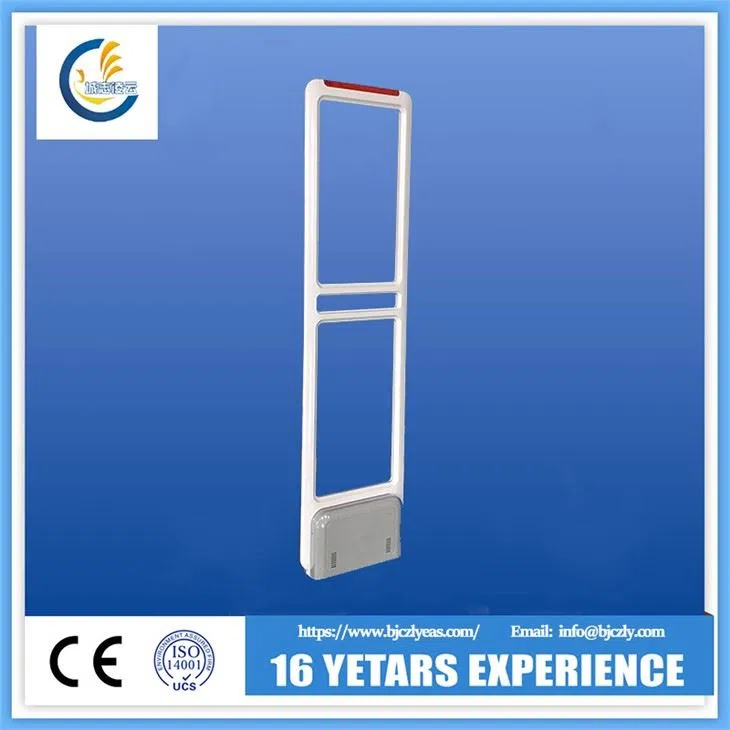
At present, the most effective solution is to install an EAS product electronic detection system. This product is time-sensitive. If any unsettled product passes through the doorway detection channel, it can alert the store sales staff in time.
At present, there are mainly two types of supermarket anti-theft doors that are most used in the market. One is the frequency 8.2Mhz (commonly known as the radio frequency door), and the other is the 58khz (acoustic magnetic door). So which frequency is better, we should How to choose? Let me give you a brief analysis from the following points:
1. At the technical level, most RF gates currently use analog signals, and acoustic magnetic gates use digital transmission technology. Therefore, acoustic magnetic gates are relatively more accurate in signal recognition. The equipment is not susceptible to other unrelated signals, and the equipment is stable. Better.
2. Detection channel width, the current effective protection channel of the radio frequency door is 90cm-120cm from the soft tag and 120-200cm from the hard tag, the acoustic magnetic door detection distance is 110-180cm from the soft tag, and the hard tag 140-280cm. Relatively speaking, the acoustic magnetic door detects The distance should be wider, and the shopping mall will feel more spacious when installed.
3. Types of products to be protected. Due to the working principle of the radio frequency system, radio frequency tags are easily shielded by human body, tin foil, metal and other signals, which makes it impossible to realize the protection function on products of this type of material, while the sound and magnetic equipment is relatively speaking Much better, even on products made of tin foil and other materials, it can also play a role in preventing theft.
4. In terms of price, due to the earlier application of radio frequency equipment, the price is lower than that of acousto-magnetic equipment. However, with the continuous improvement and rapid development of acousto-magnetic equipment in recent years, the cost has gradually decreased, and the current price gap between the two types of equipment It is gradually shrinking.
5. Appearance display effect and material. Due to some problems in radio frequency equipment, there are fewer and fewer manufacturers investing in radio frequency equipment research and development. Radio frequency equipment is not as good as acousto-magnetic equipment in terms of product innovation or R&D promotion.
To sum up, I believe you all know why you should choose the acousto-magnetic supermarket anti-theft door!