

In today's digital age, privacy has become a paramount concern for individuals and businesses alike. As a supplier of EAS RF (Electronic Article Surveillance Radio Frequency) Systems, I often encounter questions about whether there are any privacy concerns associated with these systems. In this blog post, I will delve into this topic, exploring the nature of EAS RF Systems, how they operate, and whether they pose any real threats to privacy.
Understanding EAS RF Systems
EAS RF Systems are widely used in retail stores, libraries, and other establishments to prevent theft. These systems typically consist of antennas placed at the entrance and exit of a premises and tags attached to merchandise or items. When an item with an active tag passes through the detection field created by the antennas, an alarm is triggered, alerting store personnel to a potential theft.
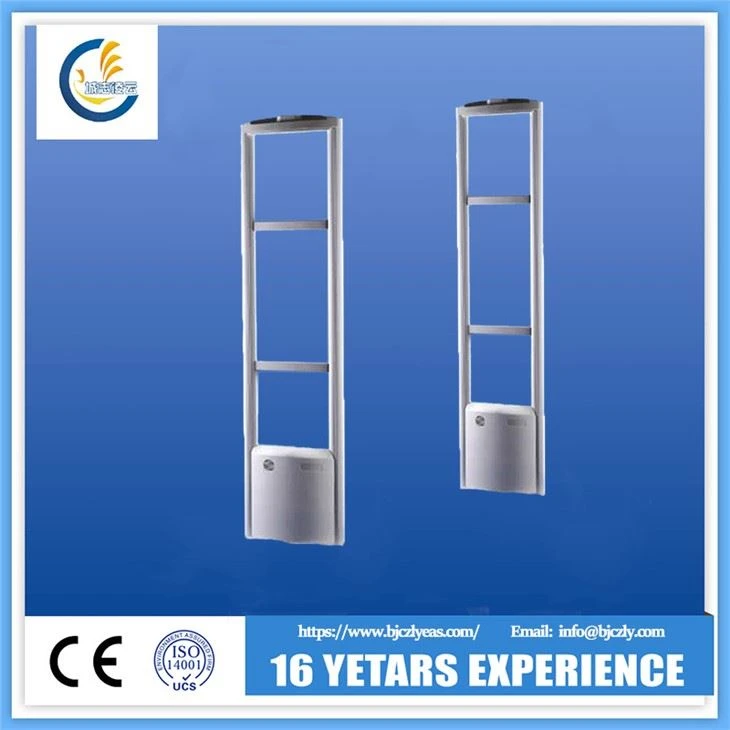
The EAS RF Security System Products we offer come in various configurations, including the 8.2Mhz Antenna MONO System and the RF Dual System. The MONO System is a single-antenna setup, suitable for smaller entrances or areas with limited space. The RF Dual System, on the other hand, uses two antennas to create a more comprehensive detection field, making it ideal for larger entrances or high-traffic areas.
How EAS RF Systems Work
EAS RF Systems operate on the principle of radio frequency technology. The antennas emit a continuous radio frequency signal, creating a detection field. The tags attached to the items contain a resonant circuit that is tuned to the same frequency as the signal emitted by the antennas. When an item with an active tag enters the detection field, the tag's resonant circuit is excited by the radio frequency signal, causing it to emit a signal of its own. The antennas detect this signal and trigger an alarm.
It is important to note that EAS RF Systems do not collect or store any personal information about the individuals passing through the detection field. The tags are designed to only respond to the radio frequency signal emitted by the antennas, and they do not have the capability to transmit or receive any other type of information.
Privacy Concerns
Given that EAS RF Systems do not collect or store any personal information, the privacy concerns associated with these systems are relatively low. However, there are still some potential issues that need to be addressed.
One concern is the possibility of false alarms. False alarms can occur when an item with a tag passes through the detection field, but the tag is not supposed to be active. This can happen if the tag was not properly deactivated at the point of sale or if there is interference from other electronic devices. False alarms can be annoying for customers and can also lead to unnecessary disruptions in the store.
Another concern is the potential for electromagnetic interference (EMI). EAS RF Systems emit radio frequency signals, which can interfere with other electronic devices in the vicinity. This can cause problems with devices such as cell phones, laptops, and other wireless devices. However, most EAS RF Systems are designed to operate within specific frequency bands and power levels to minimize the risk of EMI.
Mitigating Privacy Concerns
To mitigate the privacy concerns associated with EAS RF Systems, it is important to ensure that the systems are installed and maintained properly. This includes ensuring that the antennas are placed in the correct location and that the tags are properly deactivated at the point of sale. It is also important to test the systems regularly to ensure that they are functioning properly and to minimize the risk of false alarms.
In addition, it is important to educate customers about the purpose and operation of EAS RF Systems. This can help to reduce the anxiety and confusion that customers may feel when they pass through the detection field. Many stores post signs at the entrance and exit to inform customers about the presence of the EAS RF System and to explain how it works.
Conclusion
In conclusion, the privacy concerns associated with EAS RF Systems are relatively low. These systems do not collect or store any personal information, and they are designed to operate in a way that minimizes the risk of false alarms and electromagnetic interference. However, it is still important to take steps to mitigate the potential privacy concerns associated with these systems, such as ensuring that they are installed and maintained properly and educating customers about their purpose and operation.
If you are interested in learning more about our EAS RF Security System Products, including the 8.2Mhz Antenna MONO System and the RF Dual System, please feel free to contact us. We would be happy to discuss your specific needs and to provide you with a customized solution.

References
- "Electronic Article Surveillance: A Guide to Understanding and Implementing EAS Systems." Retail Industry Leaders Association.
- "Radio Frequency Identification (RFID) Technology: An Overview." Federal Communications Commission.
- "Electromagnetic Interference (EMI) and Radio Frequency Interference (RFI): Causes, Effects, and Solutions." Electrical Engineering Portal.