

The use of electronic article surveillance (EAS) systems is widespread in various retail environments to prevent theft. Among these systems, RF (Radio Frequency) deactivators play a crucial role. As a supplier of RF deactivators, I often receive inquiries about the potential use of these devices in hospitals. This blog aims to explore whether an RF deactivator can be used in a hospital setting, analyzing the technical feasibility, potential benefits, and challenges.
Technical Feasibility
RF deactivators work by emitting a specific radio - frequency signal to neutralize the RF tags attached to items. These tags typically operate at frequencies in the range of 8.2MHz. The technology is well - established in retail, but when it comes to hospitals, we need to consider the hospital's complex electronic environment.
Hospitals are filled with sensitive medical equipment, such as MRI machines, cardiac monitors, and infusion pumps. These devices are highly likely to be affected by external electromagnetic fields. The radio waves emitted by an RF deactivator might interfere with the normal operation of these medical devices. For example, a small interference could cause inaccurate readings on a patient's vital signs monitor, which could have severe consequences for patient care.
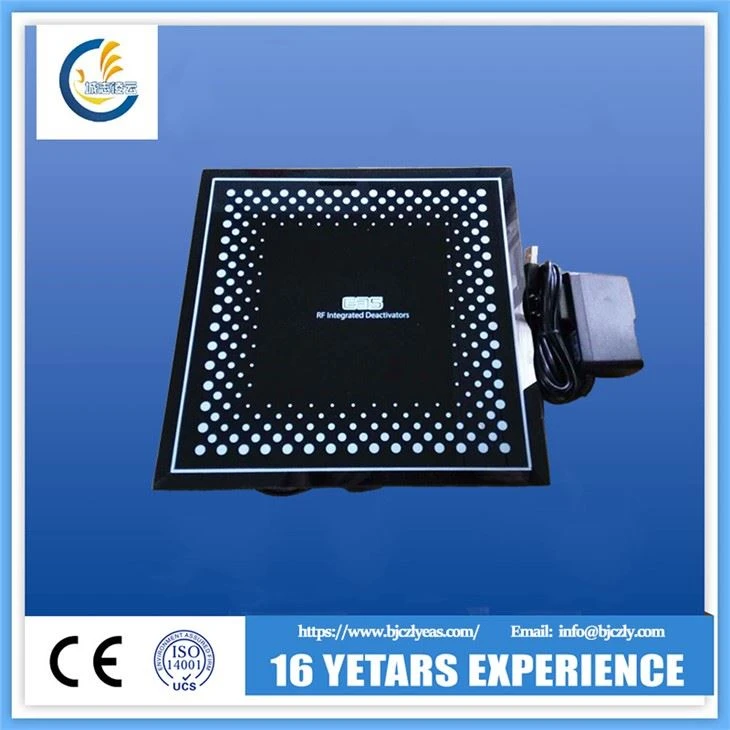
However, modern RF deactivators, like the 8.2MJZ RF Label Deactivator All - in - one, are designed with advanced shielding and frequency control technologies. These features minimize the range and intensity of the radio - frequency signals to only affect the RF tags within a short distance. If installed and used correctly, the risk of interference with medical equipment can be significantly reduced.
Potential Benefits
Inventory Management
One of the primary concerns in hospitals is efficient inventory management. There are numerous items, from medical supplies like syringes and bandages to expensive equipment, that need to be tracked. RF tags can be attached to these items, and RF deactivators can be used at the point of use or distribution. When an item is taken out of storage for use, the RF tag can be deactivated using the deactivator. This helps in accurately recording the consumption of items, preventing over - or under - stocking, and reducing the risk of theft or loss of valuable medical supplies and equipment.
Patient Safety
In some cases, RF - tagged items can pose a safety risk if they are accidentally left inside a patient's body or in a restricted area. For example, if a surgical instrument with an RF tag is not properly accounted for after a surgery, an RF deactivator can be used to check the presence of the tag in the operating room or on the patient. Once the tag is found, appropriate action can be taken to ensure patient safety.
Challenges
Regulatory Compliance
Hospitals are highly regulated environments, and the use of any new technology, including RF deactivators, must comply with strict regulatory requirements. These regulations are in place to protect patient safety and ensure the proper functioning of medical equipment. Before introducing an RF deactivator into a hospital, it is necessary to obtain approval from relevant regulatory bodies such as the FDA (Food and Drug Administration) in the United States. This approval process can be time - consuming and costly, involving rigorous testing of the deactivator for electromagnetic compatibility with medical devices.
Staff Training
Hospital staff are primarily trained in medical procedures and patient care. Introducing RF deactivators requires additional training to ensure that the devices are used correctly. Staff need to understand how to operate the deactivator safely, how to handle RF - tagged items, and what to do in case of any malfunctions or interference. Without proper training, there is a risk of incorrect use, which could lead to inventory management errors or interference with medical equipment.
Types of RF Deactivators Suitable for Hospitals
EAS All - in - one Deactivator
This type of deactivator combines the functions of tag detection and deactivation in one unit. It is compact and easy to use, making it suitable for small to medium - sized hospitals or specific departments within a large hospital, such as a pharmacy or a small storage area. The all - in - one design simplifies the process of inventory management, as staff can quickly deactivate tags as they take items out of storage.
EAS Split RF Label Deactivator
The split design of this deactivator allows for more flexibility in installation and use. The detector and the deactivator can be separated, which is useful in larger hospitals or areas with high traffic. For example, in a large hospital warehouse, the detector can be placed at the entrance, and the deactivator can be placed at the point of item distribution. This setup enables continuous monitoring of RF - tagged items as they move through the facility.
Conclusion
In conclusion, while there are technical, regulatory, and training challenges, an RF deactivator can potentially be used in a hospital. With the right precautions, such as proper shielding technology, obtaining regulatory approval, and providing staff training, RF deactivators can bring significant benefits in terms of inventory management and patient safety.
If you are a hospital administrator or a decision - maker interested in exploring the use of RF deactivators in your facility, we are here to provide you with more information and support. We can discuss customized solutions based on your specific needs, conduct on - site evaluations for electromagnetic compatibility, and offer training programs for your staff. Contact us to start a conversation about how our RF deactivators can improve your hospital's operations.

References
- "Electromagnetic Compatibility in Medical Devices: Standards and Practices" by a renowned industry expert.
- "Inventory Management in Healthcare: Best Practices and Technologies" published by a leading healthcare management research institute.