

Hey there! As a supplier of EAS EM (Electronic Article Surveillance - Electromagnetic) Systems, I'm super stoked to break down the main components of these nifty systems with you. EAS EM Systems are widely used in various industries, especially in retail and libraries, to prevent theft and keep things in check. Let's dive right in!
1. Transmitter Antenna
The transmitter antenna is like the heart of the EAS EM System. It's responsible for generating an electromagnetic field. Think of it as a force field that covers a specific area, usually at the entrance or exit of a store or library. This field is what interacts with the tags attached to the items.
The transmitter sends out a continuous electromagnetic signal at a specific frequency. This frequency is carefully calibrated to work in harmony with the tags. When everything is set up correctly, the field is stable and invisible to the naked eye, but it's doing its job behind the scenes.
2. Receiver Antenna
Right next to the transmitter antenna, you'll find the receiver antenna. Its job is to pick up any disturbances in the electromagnetic field created by the transmitter. When a tagged item passes through the field, it causes a change in the signal, and the receiver antenna detects this change.
It's like having a super-sensitive ear listening for any unusual sounds in the electromagnetic "noise." Once the receiver picks up the change, it sends a signal to the control unit, which then decides what to do next.
3. Tags
Tags are the little guys that make the whole system work. They're small, usually made of a thin strip of magnetic material, and they're attached to the items you want to protect. There are two main types of tags: hard tags and soft tags.
Hard tags are more durable and are often used for high-value items. They're usually attached to the product with a special locking mechanism that can only be removed with a specific tool at the checkout counter. Soft tags, on the other hand, are thinner and more flexible. They're often used for clothing and other items where a hard tag might not be practical.
When a tagged item passes through the electromagnetic field created by the transmitter, the tag interacts with the field and causes a change in the signal, which is detected by the receiver.
4. Control Unit
The control unit is the brain of the EAS EM System. It receives the signal from the receiver antenna and analyzes it to determine if there's a real alarm situation. It can distinguish between normal background noise and a genuine tag passing through the field.
If the control unit determines that there's a tagged item leaving the area without being properly deactivated, it triggers an alarm. The alarm can be a loud beep, a flashing light, or both, depending on the settings. The control unit also allows you to adjust various parameters of the system, such as the sensitivity of the receiver and the volume of the alarm.
5. Deactivation Device
At the checkout counter, you'll find the deactivation device. This is used to remove the security function of the tags once the item has been purchased. It works by applying a strong magnetic field to the tag, which neutralizes its ability to trigger the alarm.
There are different types of deactivation devices, depending on the type of tags used. Some are handheld, while others are built into the checkout counter. It's important to have a reliable deactivation device to ensure that customers can leave the store without setting off the alarm.
6. Alarm Indicator
The alarm indicator is what alerts everyone in the area when there's a theft attempt. It can be a visible light, such as a flashing red light, or an audible alarm, such as a loud beep or siren. The type of alarm indicator used depends on the specific needs of the store or library.

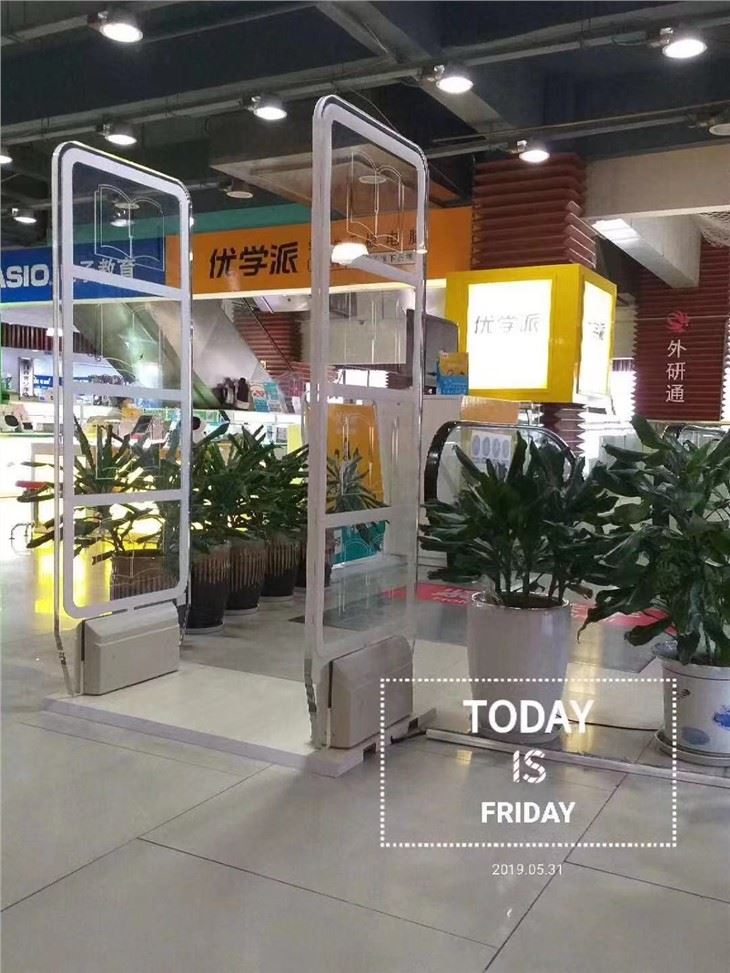
In a library, for example, a more discreet alarm might be preferred to avoid disturbing the quiet environment. In a retail store, a louder and more attention-grabbing alarm might be used to deter thieves.
7. Power Supply
Of course, all these components need power to work. The power supply provides the necessary electricity to run the transmitter, receiver, control unit, and other parts of the system. It can be a standard electrical outlet or a battery, depending on the installation requirements.
A reliable power supply is crucial to ensure that the system is always operational. In some cases, backup power supplies are used to prevent the system from going down in case of a power outage.
Our EAS EM System Products
We offer a range of high-quality EAS EM System products to meet the diverse needs of our customers. Check out our EAS library SuperbookSystem, which is specifically designed for libraries. It provides reliable protection for books and other library materials.
Our Ultra Wide And Ultra Far Acrylic Library Anti Theft System Can be divided channel alarm is another great option. It offers a wide detection range and can be customized to fit different library layouts.
And if you're looking for a high-end solution, our Super wide super high acrylic advanced library anti-theft system is the way to go. It combines advanced technology with a sleek design to provide top-notch security.
Why Choose Our EAS EM Systems?
- Reliability: Our systems are built to last and are rigorously tested to ensure reliable performance.
- Customization: We understand that every customer has different needs, so we offer customizable solutions to fit your specific requirements.
- Customer Support: Our team of experts is always ready to provide you with the support you need, from installation to maintenance.
If you're interested in learning more about our EAS EM Systems or have any questions, don't hesitate to reach out. We're here to help you find the perfect solution for your security needs. Whether you're a small retail store or a large library, we've got you covered. Let's work together to keep your valuable items safe and secure.
References
- Electronic Article Surveillance Handbook.
- Industry reports on EAS EM System technology.
That's all for now. I hope this blog post has given you a better understanding of the main components of the EAS EM System. If you have any more questions or want to discuss your specific needs, feel free to drop me a line. Looking forward to hearing from you!