

In today's digital age, the Electronic Article Surveillance - Electromagnetic (EAS EM) System has become an indispensable tool for businesses, especially in the retail and library sectors, to combat theft and protect their assets. As a leading EAS EM System supplier, we understand the critical role that network requirements play in ensuring the optimal performance of these systems. This blog post will delve into the essential network requirements for the EAS EM System, providing valuable insights for businesses considering implementing or upgrading their security solutions.
1. Bandwidth Requirements
One of the primary network requirements for the EAS EM System is sufficient bandwidth. The system continuously collects data from various sensors and antennas deployed throughout the monitored area. This data includes information about the presence or movement of tagged items, which is then transmitted to a central server for analysis.
The amount of bandwidth required depends on several factors, such as the number of sensors and antennas, the frequency of data collection, and the type of data being transmitted. For a small - scale EAS EM System in a boutique store, a relatively low - bandwidth connection, such as a DSL or a basic broadband connection, may be sufficient. However, for larger installations, such as in large - scale department stores or multi - floor libraries, a high - speed fiber - optic connection is highly recommended.
A high - speed connection ensures that the data is transmitted in real - time, allowing for immediate detection of any unauthorized removal of tagged items. Delays in data transmission can lead to false alarms or, worse, missed theft incidents. For example, if a shoplifter tries to leave the store with a tagged item, the EAS EM System needs to quickly transmit the alarm signal to the security personnel. A slow network connection could cause a delay in this process, giving the thief more time to escape.
2. Network Stability
Network stability is another crucial requirement for the EAS EM System. Unstable networks can result in intermittent connectivity issues, which can disrupt the normal operation of the system. For instance, if the connection between the sensors and the central server drops frequently, the system may not be able to receive accurate data, leading to false alarms or a failure to detect theft.
To ensure network stability, it is advisable to use a reliable Internet Service Provider (ISP). Look for ISPs with a proven track record of providing stable connections and low downtime. Additionally, redundant network connections can be set up. For example, a business can have both a fiber - optic connection and a wireless backup connection. In case the primary connection fails, the system can automatically switch to the backup connection, minimizing disruptions.
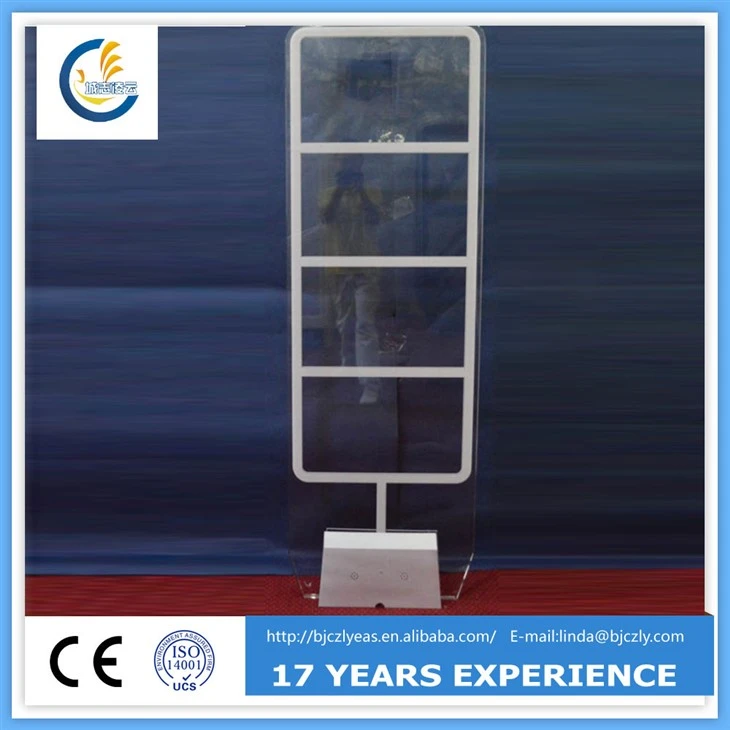
In a library setting, a stable network is essential for the proper functioning of the library Acrylic anti - theft pedestal. These pedestals are equipped with sensors that need to communicate with the central system continuously. Any network instability can cause these pedestals to malfunction, compromising the security of the library's collection.
3. Network Security
Given that the EAS EM System deals with sensitive data related to asset protection, network security is of utmost importance. The system stores and processes information about tagged items, which, if compromised, could be used by thieves to bypass the security system.
To safeguard the network, businesses should implement a multi - layer security approach. This includes using firewalls to block unauthorized access to the network. A firewall acts as a barrier between the internal network of the EAS EM System and the external Internet, preventing hackers from gaining access to the system.
Encryption is another vital security measure. All data transmitted between the sensors, antennas, and the central server should be encrypted. This ensures that even if the data is intercepted during transmission, it cannot be read by unauthorized parties. For example, the Ultra Wide And Ultra Far Acrylic Library Anti Theft System Can be divided channel alarm should have its data encrypted to protect the library's security information.
Regular security audits and updates are also necessary. Software updates for the EAS EM System should be installed promptly to patch any security vulnerabilities. Additionally, employee training on network security best practices can help prevent human - error - based security breaches.
4. Compatibility with Existing Networks
When implementing an EAS EM System, it is important to ensure that it is compatible with the existing network infrastructure of the business. Many businesses already have a network in place for other purposes, such as point - of - sale systems, inventory management, and employee communication.
The EAS EM System should be able to integrate seamlessly with these existing networks. This may require working with IT professionals to configure the system and ensure that there are no conflicts. For example, the system should be able to operate on the same network subnet as other devices without causing interference.
In a large retail chain, the EAS EM System needs to be compatible with the corporate network, which may span multiple stores. This allows for centralized monitoring and management of the security system across all locations. The Super wide super high acrylic advanced library anti - theft system should also be able to integrate with the library's existing network, which may include library management systems and Wi - Fi networks for patrons.
5. Scalability
As businesses grow and expand, their security needs also change. The EAS EM System should be able to scale with the business. This means that the network infrastructure supporting the system should also be scalable.
For example, if a small store plans to open additional branches in the future, the network should be able to accommodate the increased number of sensors and antennas that will be required. A scalable network can handle the additional data traffic without significant performance degradation.
Scalability can be achieved by using modular network components. For instance, businesses can start with a basic network setup and gradually add more switches, routers, or access points as needed. This allows for a cost - effective way to expand the network as the EAS EM System grows.
Conclusion
In conclusion, the network requirements for the EAS EM System are diverse and critical for its proper functioning. Sufficient bandwidth, network stability, security, compatibility with existing networks, and scalability are all essential factors that businesses need to consider when implementing or upgrading their EAS EM System.
As a trusted EAS EM System supplier, we are committed to providing our customers with high - quality systems that meet their specific network requirements. Our team of experts can assist you in evaluating your network infrastructure and recommending the best solutions for your business. Whether you are a small retailer or a large - scale library, we have the expertise and products to ensure that your EAS EM System operates smoothly and effectively.

If you are interested in learning more about our EAS EM System or would like to discuss your specific network requirements and security needs, we encourage you to reach out to us. Our dedicated sales team is ready to assist you in finding the perfect solution for your business and guide you through the procurement process. Contact us today to start the conversation and take the first step towards enhancing the security of your assets.
References
- [Network Fundamentals for Business Security Systems](Publisher: TechSecurity Press, Year: 2020)
- [EAS EM System: Best Practices for Network Integration](Author: John Doe, Journal: Security Technology Review, Year: 2021)