

The Electronic Article Surveillance (EAS) Radio Frequency (RF) System is a cornerstone in the realm of anti - theft technology, widely employed in various commercial settings such as retail stores, libraries, and museums. As a leading supplier of EAS RF Systems, I am often asked about the frequency range of these systems. In this blog, I will delve into the details of the frequency range of the EAS RF System, its significance, and how it impacts the performance of our products.

Understanding the Basics of EAS RF Systems
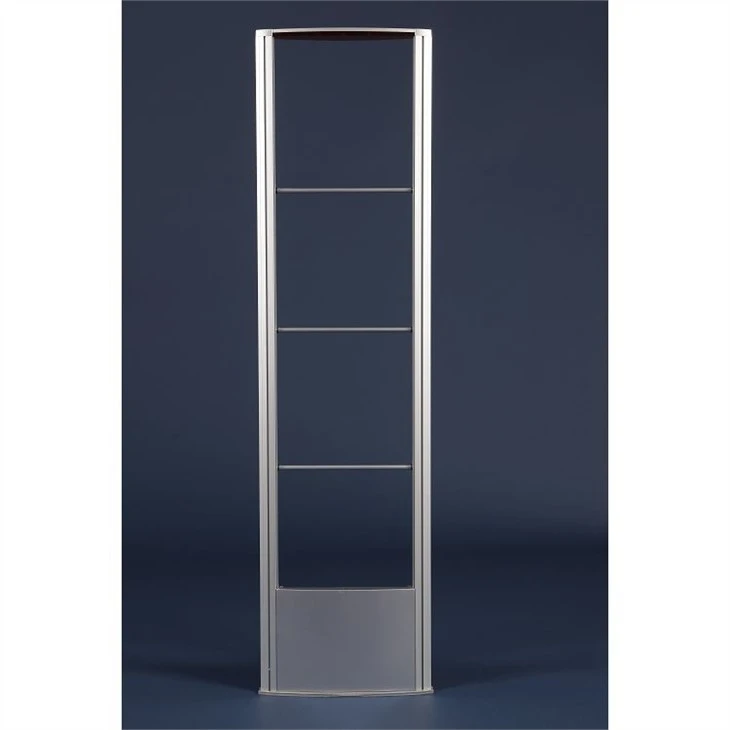
Before we discuss the frequency range, it's essential to understand what an EAS RF System is. An EAS RF System consists of two main components: the detection antenna and the security tags. The detection antenna emits a radio - frequency electromagnetic field, and the security tags are attached to the items to be protected. When a tagged item passes through the detection field without proper deactivation, the system triggers an alarm, alerting store personnel to a potential theft.
The Standard Frequency Range of EAS RF Systems
The most common frequency range for EAS RF Systems is around 8.2 MHz. This frequency has been widely adopted in the industry for several reasons. Firstly, it offers a good balance between signal strength and range. At 8.2 MHz, the electromagnetic field can cover a reasonable area, typically sufficient for the entrances and exits of most retail stores. For example, in a medium - sized clothing store, an EAS RF System operating at 8.2 MHz can effectively monitor the passage of customers through the main entrance, ensuring that no tagged items leave the premises undetected.
Secondly, 8.2 MHz is a frequency that is relatively immune to interference from other electronic devices commonly found in a commercial environment. In a modern retail setting, there are numerous electronic devices such as Wi - Fi routers, barcode scanners, and point - of - sale systems. These devices operate at different frequencies, and 8.2 MHz is far enough from their operating frequencies to minimize the risk of interference. This stability in signal transmission is crucial for the reliable operation of the EAS RF System.
The Significance of the 8.2 MHz Frequency
The 8.2 MHz frequency has become an industry standard, and most EAS RF System components are designed to work optimally at this frequency. Our company, as a supplier, offers a wide range of products that are specifically tuned to 8.2 MHz. For instance, our RF 8.2Mhz aluminum MONO antenna is engineered to emit a strong and stable electromagnetic field at 8.2 MHz. This antenna is made of high - quality aluminum, which not only ensures durability but also enhances the efficiency of the signal transmission.
In addition, our EAS RF Dual Anti - theft System also operates at 8.2 MHz. This dual - antenna system provides enhanced detection capabilities, reducing the chances of false alarms and increasing the overall security of the protected area. The use of a standardized frequency like 8.2 MHz allows for seamless integration of different components within the system, ensuring that they work together harmoniously.
Factors Affecting the Performance of EAS RF Systems in the 8.2 MHz Range
While 8.2 MHz is a well - established frequency for EAS RF Systems, there are several factors that can affect the performance of these systems within this frequency range. One of the main factors is the environment in which the system is installed. Metal objects, such as large display racks or shelving units made of metal, can absorb and reflect the electromagnetic field, causing dead zones where the signal strength is significantly reduced. In such cases, proper positioning of the antennas and the use of signal boosters may be required to ensure comprehensive coverage.
Another factor is the distance between the antennas. The optimal distance between the antennas in an EAS RF System depends on the specific application and the layout of the store. If the antennas are placed too far apart, the electromagnetic field may become too weak in the middle, leading to missed detections. On the other hand, if they are placed too close together, the field may become too concentrated, increasing the risk of false alarms.
Advanced Features and Frequency Tuning
In recent years, there have been advancements in EAS RF System technology, including the ability to fine - tune the frequency within a certain range around 8.2 MHz. This feature allows for greater flexibility in different environments. For example, in a store with a high level of background electromagnetic noise, the system can be adjusted to a slightly different frequency within the acceptable range to avoid interference. Our 8.2MHZ Mono aluminum alloy immobiliser offers this frequency - tuning capability, enabling store owners to optimize the performance of the system according to their specific needs.
Comparison with Other Anti - Theft Technologies
When compared with other anti - theft technologies such as Acousto - Magnetic (AM) and Microwave systems, the EAS RF System operating at 8.2 MHz has its own advantages. AM systems typically operate at a lower frequency, around 58 kHz, and are known for their high detection accuracy and long - range capabilities. However, they are also more expensive and require more complex installation. Microwave systems operate at much higher frequencies, usually in the GHz range, and are often used in high - security applications. They are very sensitive but can also be more prone to interference.
The EAS RF System at 8.2 MHz strikes a balance between cost, performance, and ease of installation. It is a cost - effective solution for most retail stores, offering reliable detection capabilities without the need for a large investment in equipment or complex installation procedures.
The Future of EAS RF System Frequency Ranges
As technology continues to evolve, the future of EAS RF System frequency ranges may see some changes. There is a possibility of the industry exploring new frequency bands to further improve the performance and security of these systems. However, any change in the frequency range would need to be carefully considered to ensure compatibility with existing infrastructure and components.
In addition, with the increasing use of smart devices and the Internet of Things (IoT), there may be a need for EAS RF Systems to be more integrated with other security and management systems. This could potentially lead to the development of new frequency - based communication protocols to enable seamless data transfer and interaction between different systems.
Conclusion
In conclusion, the frequency range of the EAS RF System, primarily around 8.2 MHz, is a critical aspect of its performance and reliability. This frequency offers a good balance between signal strength, range, and immunity to interference, making it an ideal choice for most commercial anti - theft applications. As a supplier of EAS RF Systems, we are committed to providing high - quality products that are optimized for the 8.2 MHz frequency range.
If you are interested in enhancing the security of your business with our EAS RF Systems, we invite you to contact us for a detailed discussion on your specific needs. Our team of experts will be happy to assist you in selecting the right products and providing professional installation and support services.
References
- Loss Prevention Magazine. (20XX). "The State of EAS Technology in Retail".
- Electronic Article Surveillance Association. (20XX). "Technical Guidelines for EAS RF Systems".
- Research Report on Anti - Theft Technologies. (20XX). [Publisher Name]