

The Electronic Article Surveillance (EAS) Radio Frequency (RF) System is a widely used anti - theft technology in the retail and library industries. As a leading supplier of EAS RF Systems, I am delighted to share with you the working principle of this remarkable system.
Basic Components of the EAS RF System
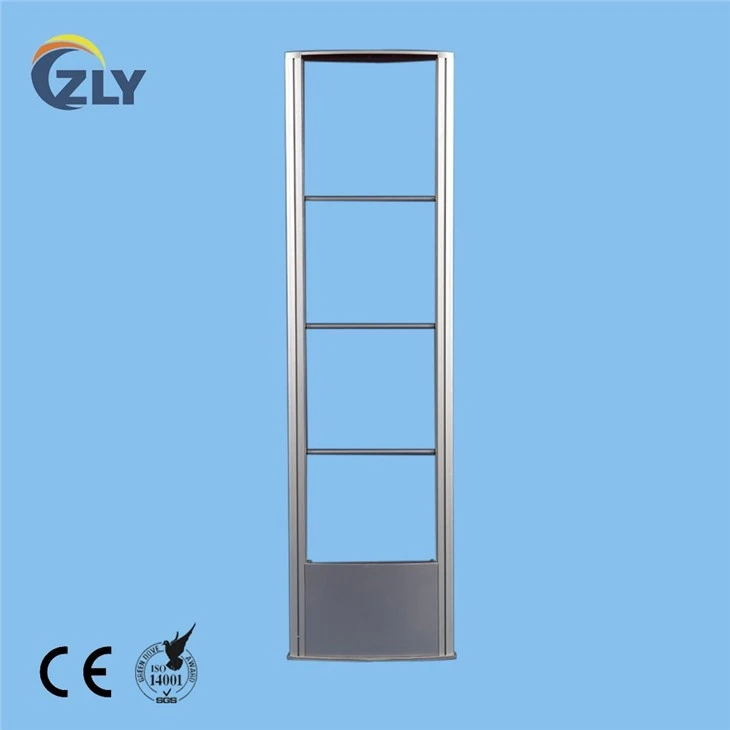
The EAS RF System primarily consists of three main components: the transmitter, the receiver, and the RF tags. The transmitter is responsible for generating a stable radio - frequency electromagnetic field. This field is typically set at a frequency of around 8.2 MHz, which is a standard frequency for EAS RF Systems. The RF 8.2Mhz aluminum MONO antenna is one of the key parts of the transmitter, which can effectively radiate the electromagnetic field into the monitored area.
The receiver is designed to detect any disturbances in the electromagnetic field. It constantly monitors the field and is sensitive to changes caused by the presence of RF tags. When a tag enters the field, it interacts with the electromagnetic waves, creating a detectable signal change that the receiver can pick up.
RF tags are small, passive devices that are attached to the items to be protected. They are made of a resonant circuit that can be excited by the external electromagnetic field. Once excited, the tag re - radiates a signal at the same frequency, which is what the receiver detects as an intrusion.
Working Mechanism
The operation of the EAS RF System can be divided into two main phases: the normal state and the alarm state.
Normal State
In the normal state, the transmitter continuously emits a stable electromagnetic field. The frequency of this field is carefully calibrated to match the resonant frequency of the RF tags. The receiver also operates in a normal mode, constantly monitoring the field strength and frequency. As long as there are no RF tags within the monitored area, the field remains undisturbed, and the receiver does not detect any abnormal signals.
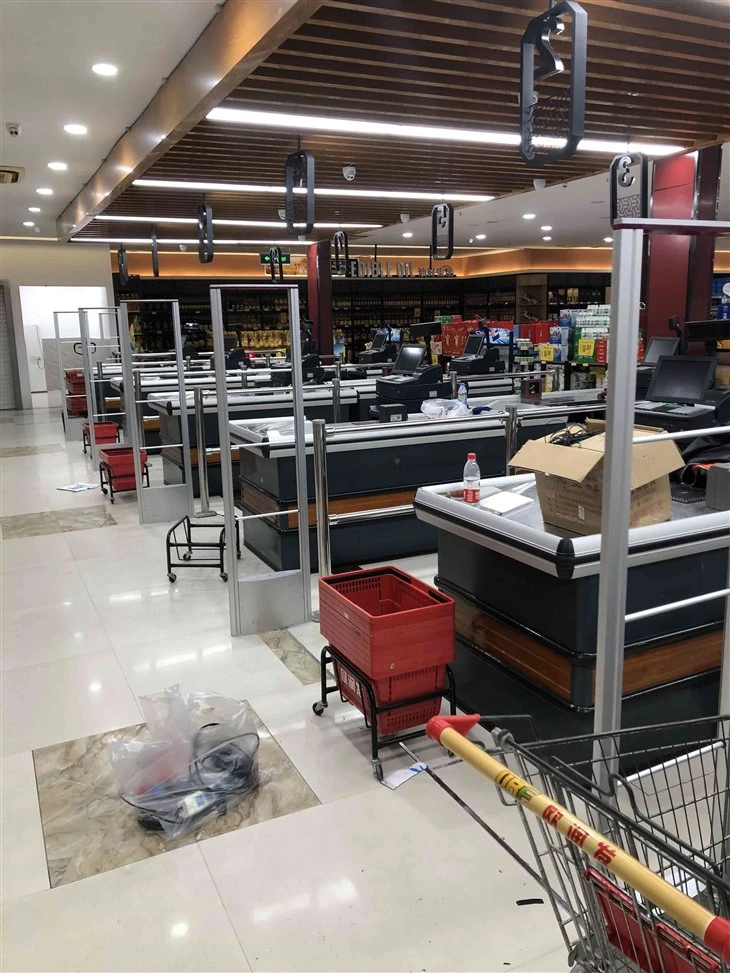
The field distribution of the EAS RF System is carefully designed to cover the entrance and exit areas of a store or library. The EAS RF Security System Products are configured in such a way that the electromagnetic field forms a seamless curtain across the monitored space. This ensures that any tagged item passing through the area will be detected.
Alarm State
When an RF - tagged item enters the monitored electromagnetic field, the tag is excited by the external field. The resonant circuit in the tag starts to oscillate at its natural frequency, which is the same as the frequency of the external field. This oscillation causes the tag to re - radiate a signal back into the field.
The receiver is sensitive to this re - radiated signal. When it detects a significant change in the field caused by the tag's signal, it triggers an alarm. The alarm can be in the form of a loud beep, a flashing light, or a combination of both. This alerts the store staff or library personnel that an unauthorized item is leaving the premises.
The RF Dual System is an advanced version of the EAS RF System. It uses two sets of transmitters and receivers, which provides a more reliable and accurate detection. The dual - system configuration can reduce false alarms and improve the overall performance of the security system.
Signal Processing and False Alarm Prevention
To ensure the reliability of the EAS RF System, sophisticated signal - processing techniques are used. The receiver not only detects the presence of a signal but also analyzes its characteristics. For example, it can distinguish between the signal from a legitimate tag and the interference from other sources, such as electronic devices or environmental noise.
The system uses algorithms to filter out any signals that do not match the characteristics of a valid RF tag. This helps to prevent false alarms, which can be a nuisance for both the business and the customers. Additionally, the system can be adjusted to optimize the sensitivity based on the specific environment and the type of items being protected.
Deactivation and Reactivation of Tags
RF tags can be deactivated at the point of sale. When a customer purchases an item, the store staff uses a deactivation device to change the state of the tag. This device emits a high - energy pulse that disrupts the resonant circuit in the tag, rendering it inactive. As a result, the tag will no longer be detected by the EAS RF System when the customer leaves the store.
In some cases, such as in a library, the tags may need to be reactivated after the item is returned. A reactivation device is used to restore the tag's functionality, so it can be detected again if the item is taken out without proper authorization.
Applications and Advantages
The EAS RF System has a wide range of applications. It is commonly used in retail stores, supermarkets, clothing shops, and libraries. In the retail industry, it helps to reduce theft and shrinkage, which can have a significant impact on the bottom line. In libraries, it ensures that books and other materials are not stolen or misappropriated.
One of the main advantages of the EAS RF System is its cost - effectiveness. The components of the system are relatively inexpensive to manufacture and install. Compared to other security technologies, such as RFID or CCTV, the EAS RF System offers a good balance between cost and performance.
Another advantage is its simplicity. The system is easy to install and operate, and it requires minimal maintenance. This makes it a popular choice for small and medium - sized businesses that may not have the resources to invest in more complex security solutions.
Conclusion
In conclusion, the EAS RF System is a reliable and effective anti - theft technology. Its working principle is based on the interaction between an electromagnetic field and passive RF tags. By carefully controlling the field generation, signal detection, and processing, the system can accurately detect the presence of tagged items and trigger an alarm when necessary.
As a supplier of EAS RF Systems, we are committed to providing high - quality products and services. Our systems are designed to meet the diverse needs of different industries and environments. If you are interested in enhancing the security of your business or institution, we invite you to contact us for a detailed discussion. We can provide you with customized solutions based on your specific requirements and budget.
References
- Loss Prevention Magazine. (2023). "Best Practices in EAS System Deployment".
- Electronic Security Journal. (2022). "Advances in Radio - Frequency - Based Electronic Article Surveillance".
- Retail Technology Review. (2021). "The Role of EAS Systems in Modern Retail Security".