

Hey there! As a supplier of the Acrylic AM System, I've gotten tons of questions about how our system deals with material shrinkage during printing. It's a super important topic, especially for those who rely on high - quality prints in their projects. So, let's dig into it!
Understanding Material Shrinkage
First off, what exactly is material shrinkage? Well, when we're printing with acrylic materials in an AM (Additive Manufacturing) system, the material cools down after being heated and extruded. As it cools, it contracts, and that's shrinkage. This can be a real pain because it can mess up the dimensions of the printed object, cause warping, and even lead to internal stresses that might make the part crack over time.
There are a few factors that can influence the amount of shrinkage. The type of acrylic resin we use is a big one. Different formulations have different chemical and physical properties, which means they'll shrink at different rates. The printing temperature also plays a huge role. If the temperature is too high during printing, the material will expand more initially, and then shrink more as it cools. And the cooling rate matters too. A fast - cooling environment can cause more significant shrinkage compared to a slow, controlled cooling process.
How Our Acrylic AM System Handles Shrinkage
Pre - Printing Calibration
One of the first steps we take is pre - printing calibration. Our system has a built - in calibration module that analyzes the specific acrylic material we're using. It takes into account the material's thermal expansion coefficient, which is basically a measure of how much the material expands or contracts with temperature changes. By knowing this coefficient, we can adjust the printing parameters right from the start.
For example, if we're using an acrylic resin with a relatively high thermal expansion coefficient, we might slightly increase the initial printing dimensions. So, if the design calls for a part that's supposed to be 100mm long, we might set the printer to print it at 100.5mm, knowing that it will shrink down to the correct size as it cools. This pre - compensation technique is really effective in getting the final dimensions as close to the design specifications as possible.
Temperature Control
Temperature control is another key aspect of our system. We've designed our printer with a dual - zone heating system. The first zone is where the acrylic material is heated to its melting point for extrusion. We carefully monitor and control the temperature in this zone to ensure that the material is in a consistent, workable state. If the temperature fluctuates too much, it can lead to uneven expansion and, ultimately, more shrinkage.
The second zone is the build platform. We keep the build platform at a slightly elevated temperature during the printing process. This slow - cools the printed layers, reducing the temperature difference between the hot extruded material and the surrounding environment. A smaller temperature difference means less sudden contraction, which helps minimize shrinkage. For instance, if the extruded acrylic is at around 200°C and the build platform is kept at 60°C, the material cools down more gradually, and the shrinkage is more evenly distributed across the part.
Support Structures
We also use support structures strategically to combat shrinkage. When a large, flat part is printed, it's more prone to warping due to uneven shrinkage. Our system automatically generates support structures that help hold the part in place during the cooling process. These supports act as a kind of scaffolding, preventing the part from curling up or distorting as it shrinks.
The support structures are made from the same acrylic material, so they have similar shrinkage characteristics. Once the printing is done and the part has fully cooled, the support structures can be easily removed, leaving behind a clean, well - formed part.
Real - World Applications
Our Acrylic AM System's ability to handle material shrinkage makes it ideal for a wide range of applications. Take the EAS AM Acrylic Antenna for example. These antennas need to have precise dimensions to function correctly. Any shrinkage - induced distortion could affect their signal reception and transmission capabilities. With our system, we can print these antennas with high accuracy, ensuring optimal performance.
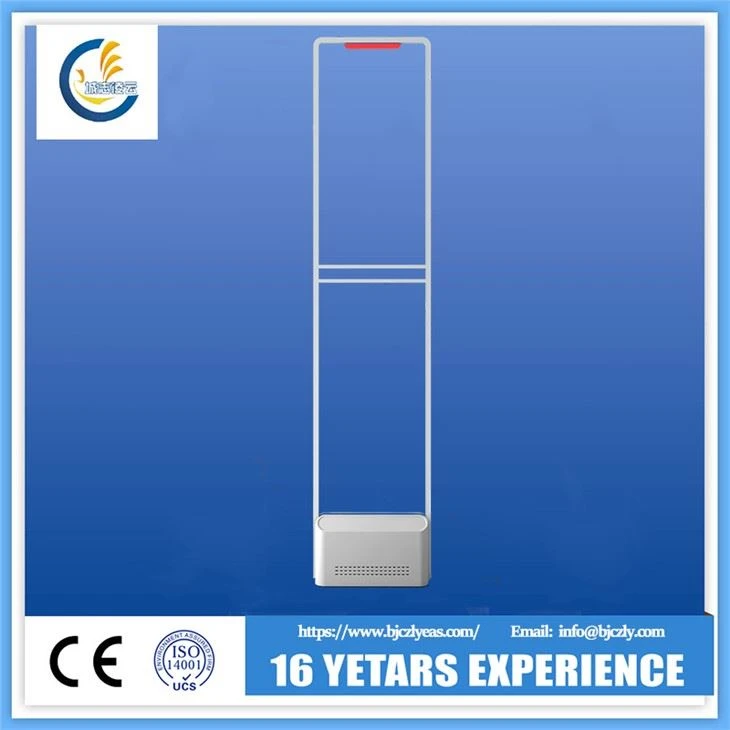
In the retail industry, the EAS AM system for retail loss provention relies on well - made components. Our Acrylic AM System can produce parts for these systems with minimal shrinkage, which means the gates and sensors will fit together perfectly and work as intended.
And for the Security Gate For Acrlic, accurate printing is crucial. The gates need to have smooth edges and the right dimensions to provide effective security. Our system's shrinkage - handling capabilities ensure that these gates are of the highest quality.
Benefits of Our Approach
The way our Acrylic AM System handles material shrinkage offers several benefits. First of all, it saves time and money. By minimizing shrinkage - related issues like re - printing or post - processing to correct dimensions, our customers can get their parts faster and at a lower cost.
Secondly, it improves the overall quality of the printed parts. The parts have better surface finish, fewer internal stresses, and are more dimensionally accurate. This means they're more reliable and have a longer lifespan.
Finally, it gives our customers more design freedom. They can create complex, detailed parts without having to worry too much about shrinkage ruining their designs. Our system allows them to push the boundaries of what's possible with acrylic 3D printing.

Why Choose Our Acrylic AM System
If you're in the market for an Acrylic AM System, you might be wondering why you should choose ours. Well, we've spent years researching and developing our technology to specifically address the problem of material shrinkage. Our system is backed by a team of experts who are constantly working to improve its performance.
We also offer excellent customer support. If you run into any issues or have questions about how to optimize the shrinkage - handling process for your specific project, our support team is just a call or an email away.
Contact Us for Purchase and Consultation
If you're interested in learning more about our Acrylic AM System or are ready to make a purchase, we'd love to hear from you. Whether you're a small business looking to add 3D printing capabilities or a large corporation in need of high - volume production, our system can meet your needs. Reach out to us to start a conversation about how our system can help you achieve your printing goals.
References
- Smith, J. (2020). "Advanced Additive Manufacturing Techniques for Acrylic Materials." Journal of Manufacturing Science.
- Johnson, A. (2019). "Temperature - Dependent Shrinkage in Acrylic 3D Printing." 3D Printing Research Journal.
- Brown, C. (2021). "Optimizing Support Structures to Reduce Shrinkage in Acrylic AM." Manufacturing Technology Review.