

The history of Electronic Article Surveillance (EAS) tags is a fascinating journey that spans several decades, marked by continuous innovation and adaptation to the ever - evolving needs of the retail industry. As an EAS Tag supplier, I have witnessed firsthand the significant impact these technologies have had on loss prevention and business operations.
Early Beginnings of EAS Technology
The roots of EAS technology can be traced back to the 1960s. During this period, retailers were facing increasing challenges with theft, which was cutting into their profit margins. Traditional security measures, such as plain - clothes detectives and security guards, were not always sufficient to deter shoplifting. In response, the first EAS systems started to emerge.
The initial EAS systems were based on electromagnetic (EM) technology. These systems used large coils placed at the exits of stores. Tags, which were typically made of a magnetic material, were attached to merchandise. When a tagged item passed through the coils without being properly deactivated, an alarm would sound. The EM technology was a significant step forward, but it had its limitations. The tags were relatively large and bulky, and the detection range was somewhat limited.
The Rise of Acousto - Magnetic (AM) Technology
In the 1980s, acousto - magnetic (AM) technology revolutionized the EAS industry. AM tags work on the principle of resonant frequency. When an AM tag is placed in an alternating magnetic field, it vibrates at a specific frequency. If the tag is not deactivated and passes through the detection zone, the system can detect this vibration and trigger an alarm.

AM technology offered several advantages over the earlier EM systems. The tags were smaller and thinner, making them less obtrusive and easier to attach to a wider variety of products. They also had a greater detection range and were more reliable in noisy environments. As a result, AM technology quickly became the standard in many retail stores around the world.
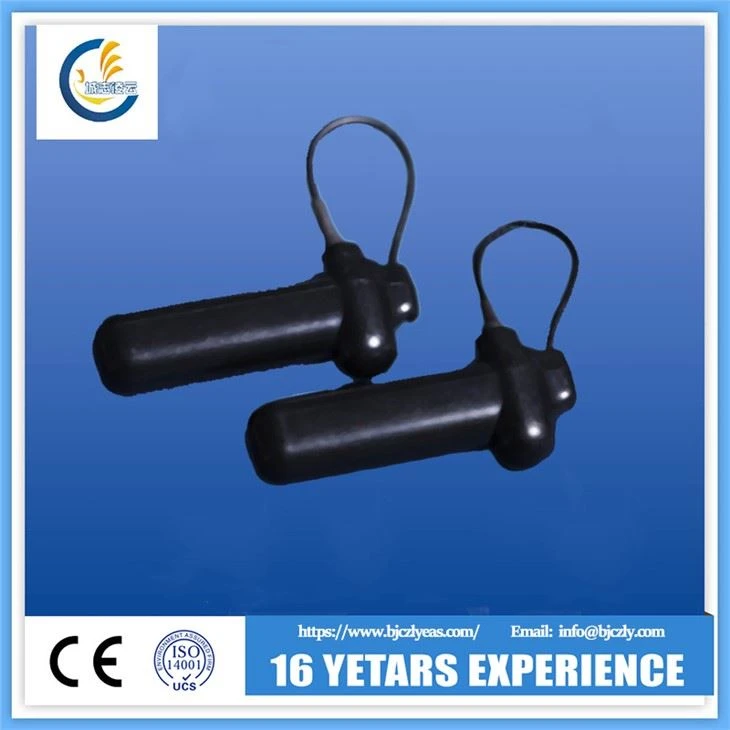
Our company offers a variety of AM - based EAS tags, such as the AM Pencil Security Tag. This tag is designed to be easily attached to clothing, accessories, and other small items. Its compact size makes it ideal for use on high - value products where a discreet security solution is required.
Development of Radio - Frequency (RF) Technology
Around the same time as the development of AM technology, radio - frequency (RF) technology also emerged as an alternative for EAS systems. RF tags operate on a specific radio frequency. When an RF - tagged item passes through an RF detection system without being deactivated, the system detects the signal and sets off an alarm.
RF technology has its own set of advantages. It is generally less expensive than AM technology, which makes it a popular choice for retailers on a budget. RF tags can also be used in a wider range of applications, including on products with metal components, where AM tags may not work as effectively.
However, RF technology also has some drawbacks. The detection range is often shorter than that of AM technology, and it can be more susceptible to interference from other electronic devices. Despite these limitations, RF tags are still widely used in many retail settings, especially for low - to - medium - value items.
Advancements in Hard Tags and Locking Mechanisms
As the EAS industry continued to grow, there was a focus on developing more advanced hard tags and locking mechanisms. Hard tags are designed to be more durable and difficult to remove without the proper deactivation tool. They are commonly used on high - value items such as clothing, electronics, and cosmetics.
One example of our advanced hard tags is the Lanyard Hard Tag. This tag features a strong locking mechanism that secures it to the product. The lanyard design allows for easy attachment to a variety of items, and it can be quickly deactivated at the point of sale using a compatible detacher.
Another innovative product is the EAS Stop Lock Tag. This tag is specifically designed to provide an extra layer of security for high - risk items. It has a unique locking system that makes it extremely difficult to remove without the correct tool, reducing the risk of theft.
Integration with Other Retail Technologies
In recent years, EAS technology has become increasingly integrated with other retail technologies. For example, many modern EAS systems can be connected to a store's point - of - sale (POS) system. This integration allows for seamless deactivation of tags at the time of purchase, reducing the chances of false alarms and improving the customer experience.
EAS technology is also being combined with video surveillance systems. When an alarm is triggered, the video surveillance system can automatically capture the area where the incident occurred, providing valuable evidence for security personnel.
The Future of EAS Tags
Looking ahead, the future of EAS tags is likely to be shaped by several trends. One of the key trends is the increasing use of data analytics. EAS systems can collect data on alarm events, such as the time of day, location in the store, and type of product involved. By analyzing this data, retailers can gain insights into theft patterns and take proactive measures to prevent losses.
Another trend is the development of more sustainable EAS tags. As environmental concerns become more prominent, there is a growing demand for tags that are made from recyclable materials and have a lower environmental impact.
In addition, the use of EAS technology in non - retail settings, such as libraries and museums, is expected to increase. These industries face similar challenges with theft and loss prevention, and EAS tags can provide an effective solution.
Conclusion
The history of EAS tags is a story of innovation and adaptation. From the early days of electromagnetic technology to the advanced systems we have today, EAS tags have played a crucial role in helping retailers protect their merchandise and reduce losses. As an EAS Tag supplier, we are committed to staying at the forefront of this industry, continuously developing new and improved products to meet the changing needs of our customers.
If you are interested in learning more about our EAS tags or would like to discuss your specific security requirements, we invite you to contact us. Our team of experts is ready to assist you in finding the best EAS solutions for your business.

References
- "Electronic Article Surveillance: An Overview" by Loss Prevention Magazine
- "The Evolution of EAS Technology" by Security Journal
- Industry reports from leading EAS technology manufacturers and research firms.