

The signal coverage pattern of an RF (Radio Frequency) Deactivator is a crucial aspect that significantly impacts its effectiveness in Electronic Article Surveillance (EAS) systems. As a leading supplier of RF Deactivators, understanding and optimizing this pattern is essential for providing top - notch products to our customers.
Understanding RF Deactivators
RF Deactivators are devices used in retail and other industries to deactivate RF tags attached to merchandise. These tags are part of an EAS system designed to prevent theft. When an item is purchased, the RF tag on it needs to be deactivated so that the item can pass through the EAS gates at the store exit without triggering an alarm.
The basic principle behind an RF Deactivator is to emit a specific radio - frequency signal that disrupts the magnetic field within the RF tag, effectively disabling its ability to trigger the alarm. However, the way this signal spreads and covers a certain area is what we refer to as the signal coverage pattern.
Factors Affecting the Signal Coverage Pattern
Frequency of the Signal
The frequency of the RF signal emitted by the deactivator plays a vital role in determining its coverage pattern. Different frequencies have different propagation characteristics. For example, lower frequencies tend to have better penetration through obstacles such as walls and merchandise, but they may have a more limited range in terms of horizontal spread. Higher frequencies, on the other hand, can have a wider horizontal spread but may be more easily absorbed or blocked by objects.
Our Hot 8.2MHz EAS RF Label Deactivator, RF EAS Deactivator operates at 8.2 MHz. This frequency has been carefully chosen to balance between penetration and horizontal coverage. It can effectively penetrate through a reasonable amount of merchandise while still providing a wide enough horizontal coverage area to deactivate tags on items placed at various positions within the deactivation zone.
Antenna Design
The antenna is the component responsible for radiating the RF signal. Its design has a direct impact on the signal coverage pattern. There are different types of antennas, such as omnidirectional and directional antennas.
Omnidirectional antennas radiate the signal in all directions equally, like a sphere around the antenna. This type of antenna is suitable for applications where tags may be placed at various angles and positions around the deactivator. Our 8.2MJZ RF Label Deactivator All - in - one uses an omnidirectional antenna design. This ensures that tags on items placed in front of, beside, or even slightly behind the deactivator can be effectively deactivated.
Directional antennas, on the other hand, focus the signal in a specific direction. They are useful in situations where the tags are expected to pass through a narrow and well - defined area. For example, in a conveyor belt system where items are moving in a single direction, a directional antenna can be used to concentrate the signal along the path of the items, maximizing the deactivation efficiency.
Power Output
The power output of the RF Deactivator also affects the signal coverage pattern. Higher power output generally means a larger coverage area. However, there are limits to the power that can be used due to regulatory requirements and safety concerns.
Our deactivators are designed to operate within the legal power limits while still providing sufficient coverage. By optimizing the power distribution and the antenna design, we can ensure that the signal reaches the tags with enough strength to deactivate them, even in areas that are slightly farther from the deactivator.
Measuring the Signal Coverage Pattern
To accurately understand the signal coverage pattern of our RF Deactivators, we use a variety of measurement techniques. One common method is to use a field strength meter. This device measures the strength of the RF signal at different points in the deactivation zone.
We place the field strength meter at various distances and angles from the deactivator and record the signal strength readings. By plotting these readings on a graph, we can visualize the signal coverage pattern. This helps us to identify areas of strong and weak signal, and make adjustments to the antenna design or power output if necessary.
Another technique is to use dummy RF tags. We place these tags at different positions within the deactivation zone and then try to deactivate them using the deactivator. By checking which tags are successfully deactivated and which are not, we can get a practical understanding of the effective coverage area.
Importance of an Optimal Signal Coverage Pattern
An optimal signal coverage pattern is crucial for the proper functioning of an RF Deactivator. If the coverage is too limited, there is a risk that some tags may not be deactivated, leading to false alarms at the store exit. This can cause inconvenience to customers and may even result in lost sales.

On the other hand, if the signal spreads too widely and uncontrollably, it may interfere with other electronic devices in the vicinity. This can lead to malfunctions in other systems and may also violate regulatory requirements.
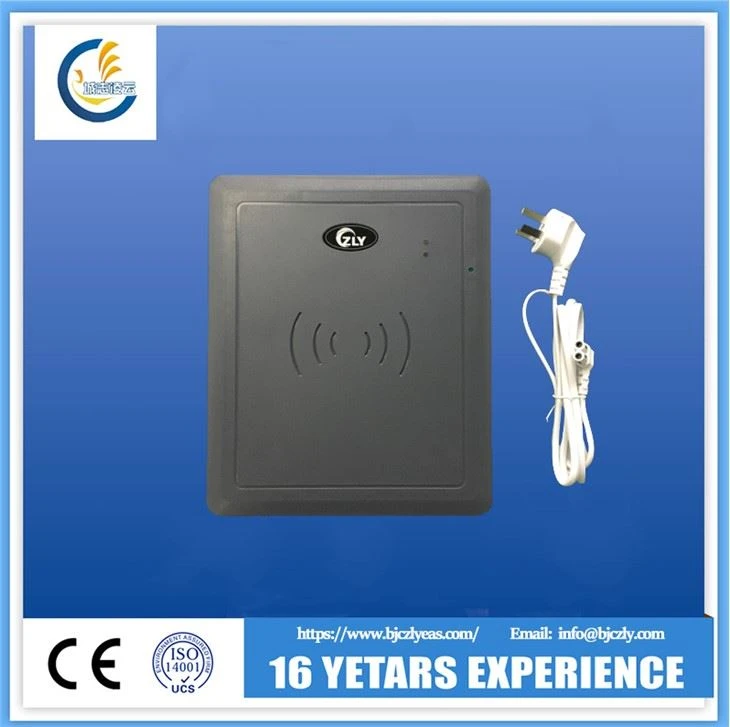
Our 8.2 RF Soft Label Deactivator is designed with an optimal signal coverage pattern in mind. It can effectively deactivate tags on items placed within a reasonable range, while minimizing the risk of interference with other devices.
Applications and Considerations in Different Environments
Retail Stores
In retail stores, the layout and the amount of merchandise can vary greatly. A large department store with multiple aisles and a high volume of merchandise may require a different signal coverage pattern compared to a small boutique.
In a large store, we may need to use multiple deactivators or deactivators with a wider coverage pattern to ensure that all tags are deactivated. The deactivators should also be placed in strategic locations, such as at the cash registers, to ensure that items are deactivated as soon as they are purchased.
Libraries
Libraries use RF Deactivators to deactivate tags on books. The environment in a library is relatively open, but there may be shelves and partitions that can affect the signal propagation.
Our deactivators are designed to work effectively in this type of environment. The signal coverage pattern is optimized to penetrate through the shelves and reach the tags on the books, even when they are placed in the middle of a stack.
Conclusion
The signal coverage pattern of an RF Deactivator is a complex but essential aspect of its design. By carefully considering factors such as frequency, antenna design, and power output, we can optimize the coverage pattern to meet the needs of different applications.
As a supplier of RF Deactivators, we are committed to providing our customers with products that have the best possible signal coverage pattern. Our products are designed and tested to ensure reliable and efficient tag deactivation, while also complying with all relevant regulations.
If you are interested in learning more about our RF Deactivators or are looking for a solution for your EAS system, we invite you to contact us for further discussion and procurement. We are ready to work with you to find the most suitable deactivator for your specific needs.
References
- "Radio Frequency Engineering Handbook" by John L. Besser
- "Electronic Article Surveillance Systems: Principles and Applications" by various authors in the EAS industry