

Cosmic rays are high - energy particles that originate from outer space, mainly consisting of protons, atomic nuclei, and a small amount of electrons. These particles carry significant energy and can have various impacts on the Earth's environment and technological systems. As a supplier of EM (Electromagnetic) detectors, I am often asked about how our EM detectors work in detecting cosmic rays. In this blog, I will delve into the principles, components, and processes involved in using EM detectors for cosmic ray detection.
The Basics of Cosmic Rays
Before understanding how EM detectors work, it's essential to have a basic knowledge of cosmic rays. Cosmic rays can be divided into two main categories: primary cosmic rays and secondary cosmic rays. Primary cosmic rays are those that originate directly from astrophysical sources such as supernovae, active galactic nuclei, and the Sun. When these high - energy primary cosmic rays enter the Earth's atmosphere, they collide with the atoms and molecules in the atmosphere, producing a cascade of secondary particles, including pions, muons, electrons, and photons.
The energy spectrum of cosmic rays is extremely wide, ranging from a few MeV (Mega - electron volts) to more than 10²⁰ eV (electron volts). The low - energy cosmic rays are mainly from the Sun, while the high - energy ones are believed to come from more distant and violent astrophysical events.
Principles of EM Detectors in Cosmic Ray Detection
EM detectors operate based on the interaction between cosmic rays and electromagnetic fields. When a cosmic ray particle passes through a detector, it can ionize the atoms or molecules in the detector medium. This ionization process creates free electrons and positive ions, which can be detected as an electrical signal.
One of the fundamental principles used in EM detectors is the Lorentz force. The Lorentz force describes the force experienced by a charged particle moving in an electromagnetic field. The formula for the Lorentz force is (F = q(E + v\times B)), where (q) is the charge of the particle, (E) is the electric field, (v) is the velocity of the particle, and (B) is the magnetic field.
In an EM detector, the charged cosmic ray particles interact with the electric and magnetic fields inside the detector. The resulting force causes the particles to change their trajectory, and this change can be measured. For example, in a magnetic spectrometer, the magnetic field bends the path of charged cosmic ray particles. By measuring the curvature of the particle's path, we can determine the particle's charge - to - momentum ratio.
Another important principle is the Cherenkov radiation. When a charged particle moves through a medium with a speed greater than the speed of light in that medium, it emits Cherenkov radiation. This radiation is in the form of a cone of light that can be detected by photomultiplier tubes or other light - sensitive detectors. Many EM detectors use Cherenkov radiation to detect high - energy cosmic ray particles.
Components of an EM Detector for Cosmic Ray Detection
- Detection Medium: The detection medium is the material through which the cosmic ray particles pass and interact. Common detection media include gases (such as argon, neon), liquids (such as water), and solids (such as silicon). Each type of detection medium has its own advantages and disadvantages. For example, gas - filled detectors are relatively simple and can be used to measure the ionization produced by cosmic ray particles. Liquid - based detectors, like water Cherenkov detectors, are often used for detecting high - energy particles due to their large volume and ability to detect Cherenkov radiation.
- Sensors: Sensors are used to convert the physical signals produced by the interaction of cosmic rays with the detection medium into electrical signals. For ionization - based detectors, electrodes are used to collect the free electrons and positive ions produced by ionization. Photomultiplier tubes are commonly used to detect Cherenkov radiation. These tubes can amplify the weak light signals produced by Cherenkov radiation into measurable electrical signals.
- Electronics and Data Acquisition System: Once the sensors detect the signals, the electronics and data acquisition system are responsible for processing and recording the data. This system includes amplifiers, discriminators, and analog - to - digital converters. The amplifiers increase the amplitude of the weak electrical signals, the discriminators are used to distinguish between real signals and background noise, and the analog - to - digital converters convert the analog signals into digital data that can be stored and analyzed by a computer.
- Magnetic Field Generator (Optional): In some EM detectors, a magnetic field generator is used to create a magnetic field. As mentioned earlier, the magnetic field can be used to bend the path of charged cosmic ray particles, allowing for the measurement of their charge - to - momentum ratio.
The Detection Process
- Particle Interaction: When a cosmic ray particle enters the detection medium, it starts to interact with the atoms or molecules in the medium. If the particle has enough energy, it can ionize the atoms, creating free electrons and positive ions. In the case of high - energy particles, it may also produce Cherenkov radiation if its speed is greater than the speed of light in the medium.
- Signal Generation: The ionization or Cherenkov radiation produced by the particle interaction generates a physical signal. For ionization, the free electrons and positive ions create an electrical current that can be detected by the electrodes. For Cherenkov radiation, the light is detected by the photomultiplier tubes, which convert the light into an electrical signal.
- Signal Processing: The electrical signals generated by the sensors are then sent to the electronics and data acquisition system. The amplifiers increase the signal strength, and the discriminators remove the background noise. The analog - to - digital converters convert the analog signals into digital data.
- Data Analysis: The digital data is then analyzed by a computer. The analysis may involve determining the energy, charge, and direction of the cosmic ray particles. By analyzing the data from multiple detectors, scientists can also reconstruct the trajectory of the particles and study their origin and properties.
Applications of EM Detectors in Cosmic Ray Research
- Astrophysics Research: EM detectors are crucial for studying the origin and acceleration mechanisms of cosmic rays. By measuring the energy spectrum, composition, and arrival direction of cosmic rays, scientists can gain insights into the astrophysical processes that produce these high - energy particles. For example, the detection of ultra - high - energy cosmic rays can help us understand the most energetic events in the universe, such as gamma - ray bursts and active galactic nuclei.
- Space Weather Monitoring: Cosmic rays can have an impact on the Earth's atmosphere and space environment. High - energy cosmic rays can ionize the upper atmosphere, affecting radio communication and satellite operations. EM detectors can be used to monitor the intensity of cosmic rays, providing early warnings for space weather events.
- Particle Physics Experiments: Cosmic rays can be used as a natural source of high - energy particles for particle physics experiments. By studying the interactions of cosmic rays with matter, scientists can test the fundamental theories of particle physics, such as the Standard Model.
Our EM Detector Products
As a supplier of EM detectors, we offer a range of products suitable for cosmic ray detection. Our EM all - in - one Activation Deactivation and Check is a versatile device that can be used in various detection scenarios. It combines the functions of activation, deactivation, and checking, providing a comprehensive solution for cosmic ray detection.
Our Library EM All - in - one deactivator & activator is designed for more specialized applications. It is highly accurate and reliable, making it ideal for research institutions and laboratories.
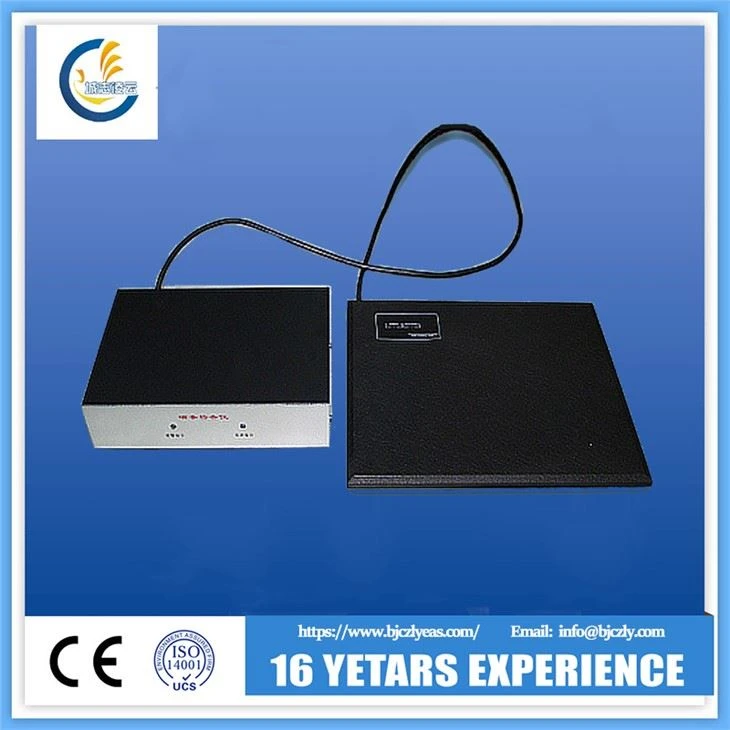

In addition, our EM Book Label Checker can also be used in cosmic ray detection. It has a high - sensitivity detection system that can detect even the weakest signals from cosmic ray particles.
Contact Us for Procurement
If you are interested in our EM detector products for cosmic ray detection, we welcome you to contact us for procurement and further discussions. Our team of experts is ready to provide you with detailed information and technical support. Whether you are a research institution, a space agency, or a company involved in related fields, our products can meet your needs.
References
- Longair, M. S. (2011). High - Energy Astrophysics. Cambridge University Press.
- Gaisser, T. K. (1990). Cosmic Rays and Particle Physics. Cambridge University Press.
- Bhattacharjee, P., & Sigl, G. (2000). Ultra - high - energy cosmic rays. Physics Reports, 327(1 - 2), 109 - 247.